8 min read
And why, despite the dystopian direction society is heading in, I feel freer right now than ever.
Of course, you can argue that the sense of freedom is deeply individual, that freedom lives in your head, and that a person can feel free even in a gulag. Solzhenitsyn put it into the mouth of the prisoner Bobynin in The First Circle, who says it straight to the face of the Minister of State Security: “You only have power over people so long as you don’t take everything away from them. But when you’ve robbed a man of everything, he’s no longer in your power. He’s free again.”
I’ll be pragmatic, though. Here are the things that have freed me the most, in my private life and in my work.
1. Crypto and other liberating technologies
What turned me into a libertarian was crypto, Bitcoin at first. It showed me that almost a million accounts on the Silk Road darknet market (the FBI counted 957,079) could trade with each other voluntarily, on both sides, without any state control or intervention. All it took was bitcoin, a reputation system and escrow. Sales reached roughly $1.2 billion, and the US Department of Justice called it the most sophisticated and extensive criminal marketplace on the Internet. For the state it was the most dangerous project on the web. For me it was a working demonstration of crypto-anarchy.
That free-market miracle was only possible because of bitcoin, a money no state controls. The state shut Silk Road down in October 2013, and its founder Ross Ulbricht got two life sentences without the possibility of parole. President Trump pardoned him in January 2025.
Today, anonymous crypto loans give me a great deal of financial freedom. I can turn Monero or Zcash into DeFi collateral without any KYC. Aave and Morpho don’t accept Monero or Zcash as collateral directly, so I first swap them for bitcoin, then convert that into tBTC or cbBTC, and only then deposit it as collateral. Against it I borrow stablecoins (USDT, USDC, EURC or EURCV), and I live comfortably off that loan for the long term. I’ve described exactly how it works here.
It’s especially liberating because it works even if you are a tax resident of a tax hell like the EU. A loan is not income.
Shorting the euro, betting that over the long run it will fall against bitcoin, Zcash or Monero, fits my ideological convictions. It also works economically. With inflation where it is, nothing beats living off an EURCV loan at around 2% a year. EURCV is a euro stablecoin, and on Morpho you can borrow it at that rate today against cbBTC or WBTC. The debt is in euros, so inflation shrinks it in real terms every year while the bitcoin collateral, ideally, grows. So every year’s euro inflation makes me more than happy.
Bitcoin and crypto aren’t the only technologies that help you escape the regulator’s claws. There are many more, and I went through them in my talk Technologies of Freedom 2026.
2. Unplugging from the state and my obligations to it
Permanent residence in Slovakia cancelled, no tax or social-security obligations. It freed me, above all, mentally.
The only thing I regret (and most of our clients say the same) is that I didn’t do it sooner. In my view, cancelling your permanent residence makes sense whether or not you keep living in an EU country. I cover this in my talk How to leave the system while staying in one place, and for families in From Family Plan B to Full Opt-Out.
I don’t have to do anything. I pay no taxes and no social contributions in the European tax hell. I’m very glad I’m not a victim of the involuntary pyramid game called the social system, which ageing Europe is going to pay dearly for.
As a voluntaryist, I found it extremely hard to bear that I had to keep paying for something I never chose voluntarily. And on top of that, to keep hearing that it’s “the price of a civilized society”.
Since I started contributing only to what I choose to, I feel a lot lighter mentally. It helped me more than any psychotherapy.
3. Residencies in territorial-tax countries that want nothing from me
Leaving the EU meant I needed a plan B, so I got permanent residencies in countries that want nothing from me: Paraguay, Uruguay and Panama. Unlike in the EU, I have no tax or social-security obligations there.
All I get out of it are advantages: with a permanent-residency cédula I travel around Mercosur without a passport, I have extra driving licences, and in Paraguay I have the best tax residency in the world without having to actually live there. Here is a detailed comparison of all three countries, and a short quiz tells you which one fits you best.
We’ve forgotten that a resident or citizen is supposed to be a customer the state serves. In the EU that stopped being true long ago, and in Slovakia even more so. The burden of mandatory payments there reached 63.59% of labour costs for an employee on the average wage in 2025. We are real tax slaves who spend most of our time working to keep a dysfunctional, bureaucratic and corrupt state running. Look around and ask yourself whether the state really provides two thirds of all the services you see, and the private sector only one third. And if it does, at what quality.
4. Living on crypto alone, and if bank accounts, then ones that don’t spy
The best option is to live purely on crypto and not need bank accounts at all, if you can afford to. In some countries this already works with practically no limits. In Argentina you can pay any Mercado Pago QR code straight from USDT or BTC through Lemon, in Brazil Oobit lets you pay any Pix QR code from USDT, and in Poland Bitblik lets you pay for practically anything by BLIK from Bitcoin Lightning. In Kenya Tando lets you pay anyone who accepts M-Pesa from Lightning, and in South Africa MoneyBadger lets you pay in bitcoin at every Pick n Pay store. Even in Slovakia you can live entirely on bitcoin if you withdraw anonymous cash from ATMs through the Bitblik system. It works at about two thirds of Slovak ATMs (Tatra banka, SLSP, VÚB, Prima banka).
If you do need a bank account, ideally it’s one that doesn’t spy on you and doesn’t send everything to your home country. CRS is the blanket automatic reporting of bank accounts to the tax office of whichever country you are tax resident in. In Slovakia, on top of that, the intelligence service (SIS) can obtain data covered by banking secrecy on a written request, without the client’s consent and without a court order (§ 91(4) of the Banking Act), though only in connection with organized crime, terrorism and security clearances. That’s why I decided to keep bank accounts outside CRS: in Kyrgyzstan, in Paraguay (though it has committed to start exchanging by 2028), in Honduras and in Serbia. Neither Honduras nor Serbia has set a date yet.
5. Life in a “self-sufficient” campervan
My VW California 6.1 with solar panels, Starlink and partly autonomous driving from comma.ai (openpilot with FrogPilot) has given me freedom in the physical world. I don’t depend on the power grid or on a Slovak or European internet provider. Unlike Slovak and Czech operators, Starlink doesn’t apply the DNS blacklists they use to block online gambling, Polymarket and other sites.
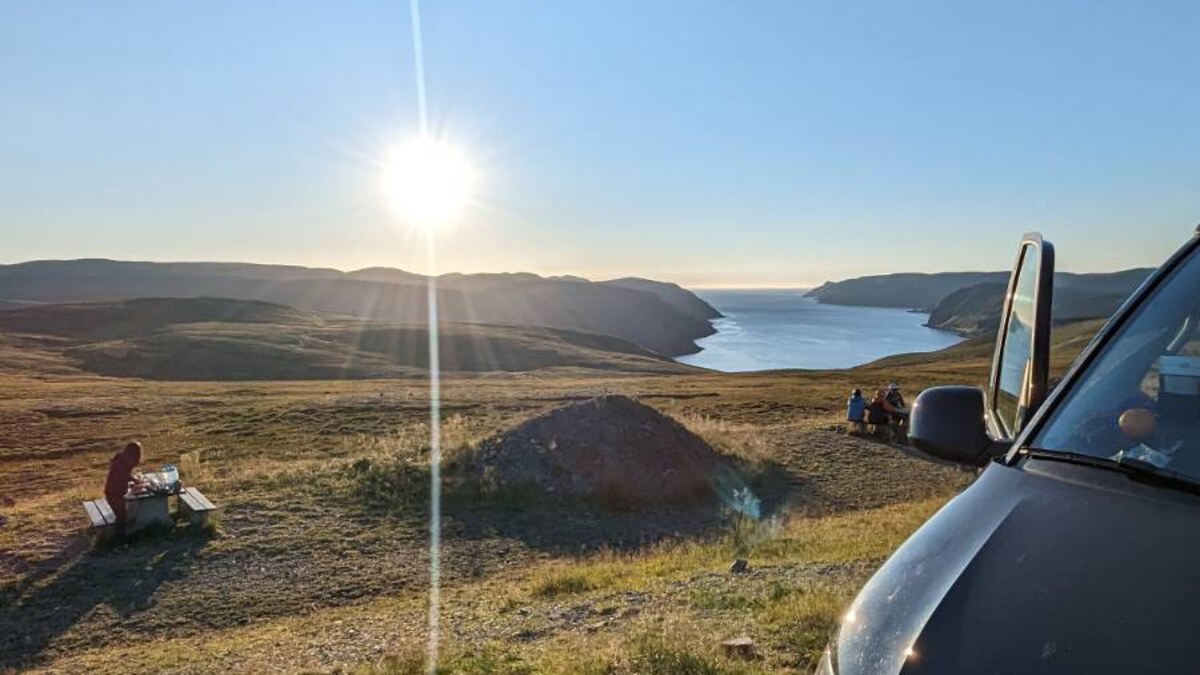
I can head into remote mountains, with no electricity and no signal, and in the middle of beautiful nature live a comfortable online life and work normally. All I need is water and food, and I can find those almost anywhere.
6. The minimalist life of a traveller
The campervan is for travelling around Europe, the backpack is for flights. When I fly, my whole life fits into a small backpack under 7 kg, and that is incredibly liberating. Here’s how I pack as a high-tech minimalist.
A small backpack and a traveller’s minimalist mindset make me flexible. I don’t stay a single day longer anywhere I don’t like, where the community is toxic or there’s an unpleasant tax slaver or censor. Solzhenitsyn gave this advice in The Gulag Archipelago: “Own only what you can always carry with you: know languages, know countries, know people. Let your memory be your travel bag.”
I realized that a lot of things cause me stress and I don’t need them at all. Almost everything can be paid for, rented or borrowed. I once dreamed of a big beautiful house that would meet all my expectations. When I finally had it, I found it didn’t make me happy. I want to keep moving. I want to live in many beautiful houses all over the world, and I don’t need to own any of them.
I realized something important: experience matters far more to me than comfort and a home base.
It’s worth finding out whether that’s true for you too.
7. AI for a better life
Of everything on this list, AI is what gives me the most freedom right now, because it saves me as much time as possible and massively boosts my productivity.
I have never had such enormous control over the digital world as I do now. I feel like a demigod who wakes up in the morning with a grand idea, and by evening it’s built and working. Whether it’s a new article, like this one, or a new app. I spend a lot of money on it every month (Claude Max, Gemini, Grok, powerful Chinese models through Venice.ai), but given how much it helps me, I’d happily pay ten times more.
AI has freed me from practically every repetitive task in the online world. Everything that could be automated, I’ve automated or I’m automating right now. I run several agents that orchestrate other agents, hand out work to them and check it. They talk to my clients, write new apps and fix old ones, plan my trips down to the last detail, analyze legislation in different countries every day, and fix and improve my articles.
Conclusion
Sadly, society isn’t moving towards greater freedom. Quite the opposite: it’s moving towards more dystopia.
Even so, thanks to these seven things, I’ve set up my life so that I feel freer than ever before. And you can do the same.
This article was written by my AI agent from a few notes I gave it. Meanwhile I was in a Finnish sauna in Helsinki.
Slovak version: 7 vecí, ktoré ma najviac oslobodili